O3DE AWS Integration – Gems, Resources, and SSO
Overview
During the launch of O3DE—an open-source 3D game engine—one of the final projects tackled was what we informally called “AWS Integration.” While AWS was one of the intended integrators, the vision was much larger: building a bridge that would allow any third party to create integration tooling within the engine. For example, AWS could offer easy access to multiplayer servers or game publishing tools, and other providers could do the same. At the time, O3DE had no official store and no coordinated framework to build upon.
The Vision
The initial idea was simple: wouldn’t it be nice to integrate an AWS bridge that lets developers set up a multiplayer game with just a few clicks? At the time, installing plugins required extensive offline setup. We wanted to create a seamless integration tool that eliminated that friction.
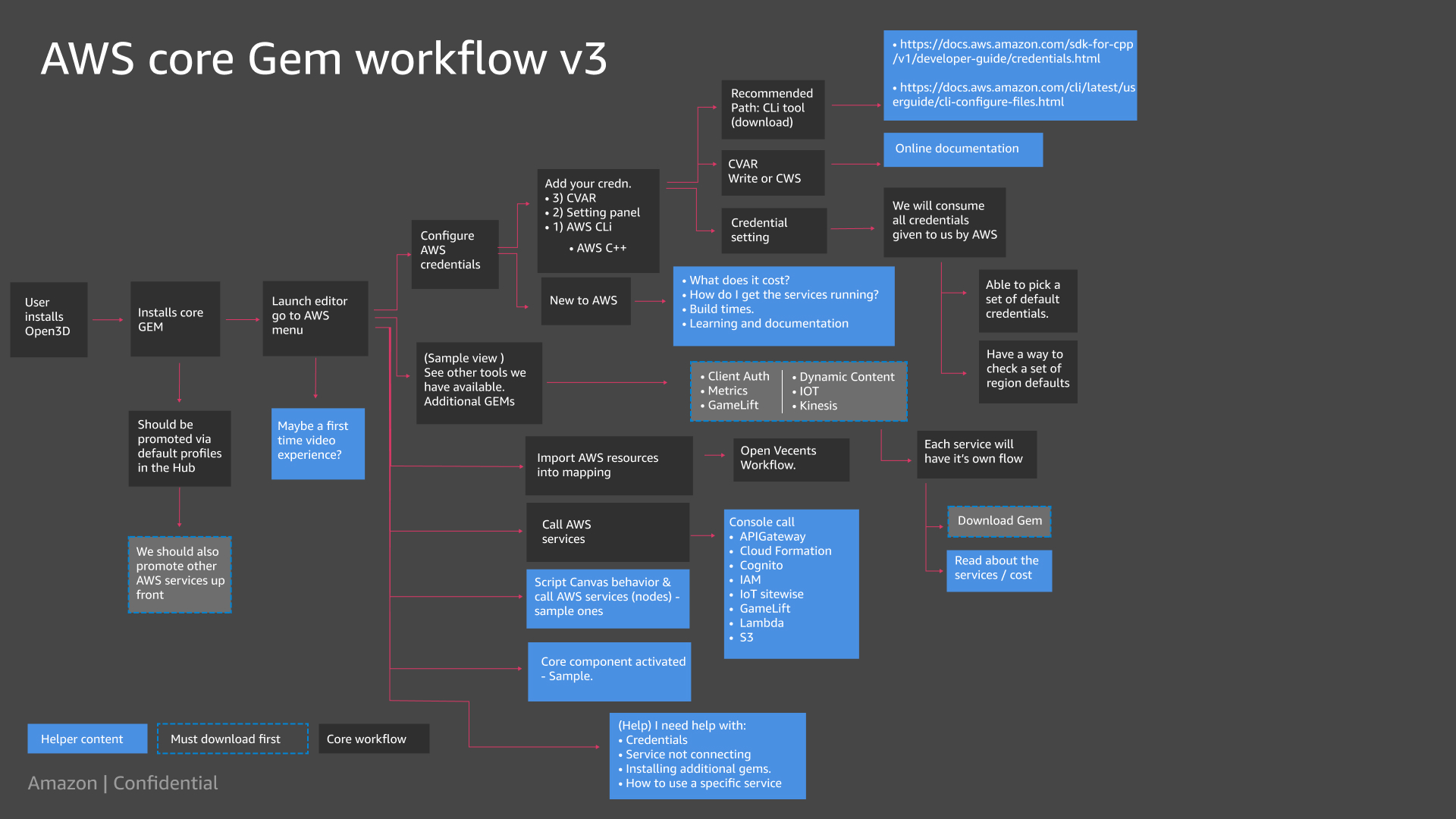
But the designs went far beyond that starting point. The Cloud Services Integration workflow was designed to span the full lifecycle—from AWS account setup and service discovery, through activation and management, to team onboarding and content building with activated services directly inside O3DE. At the time, O3DE only offered a preliminary integration experience, requiring users to navigate dispersed processes outside the engine to configure their AWS account and services.
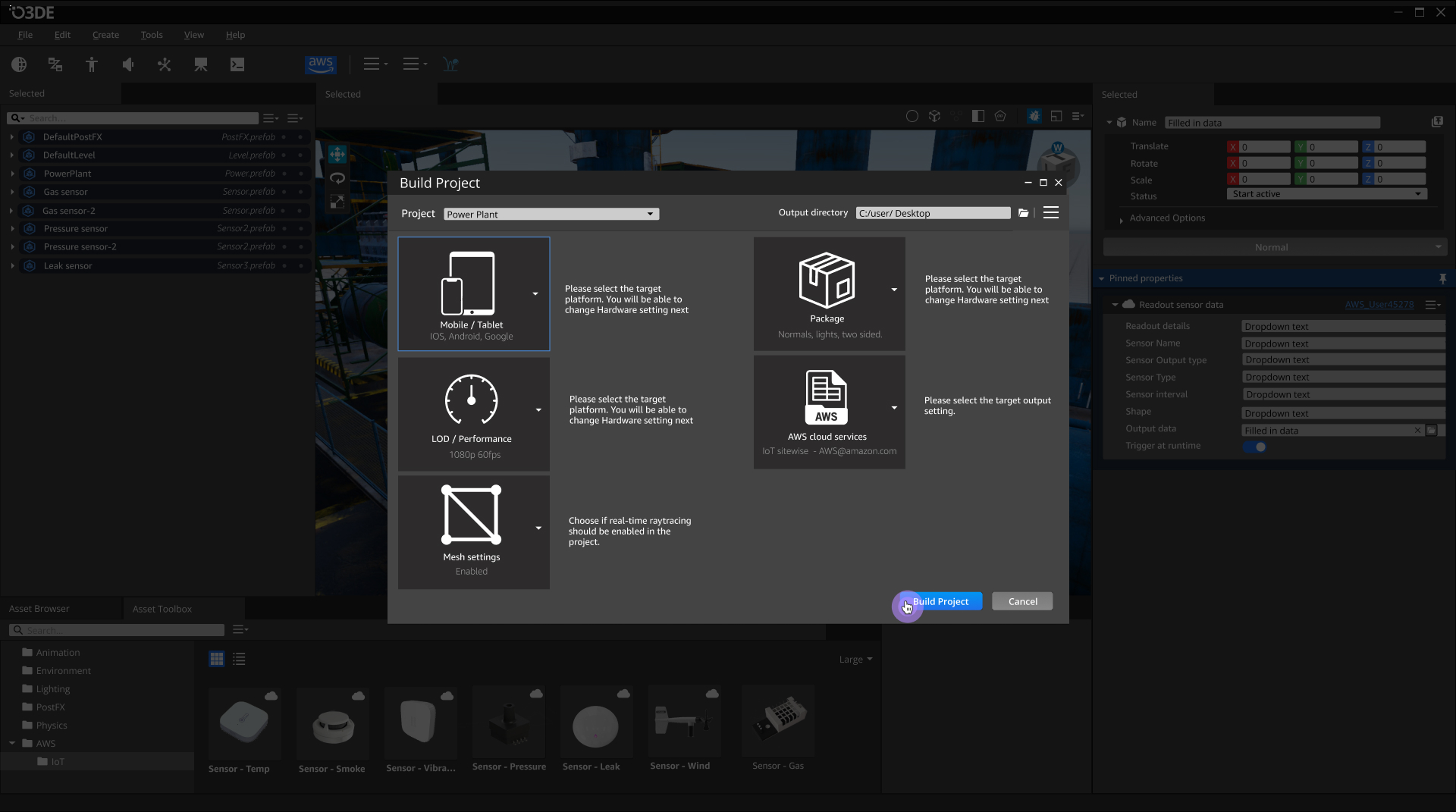
Our Wave 1 goal included shipping tools such as a Gazebo importer, Project exporter, and AWS Simulation tool, among others. Hidden in my designs was direction far more future-thinking than what we ultimately delivered—essentially a mini app store inside a game engine.
Challenges
Building an integration marketplace inside an open-source engine required significant effort. Long-term maintenance and security concerns were raised early by our development team and had to be carefully considered. Additionally, the rules and regulations required to be fair and just within an open-source ecosystem added complexity. Ultimately, the team did not have enough resources to build something of that scale—but that never stopped us from trying.
Outcome
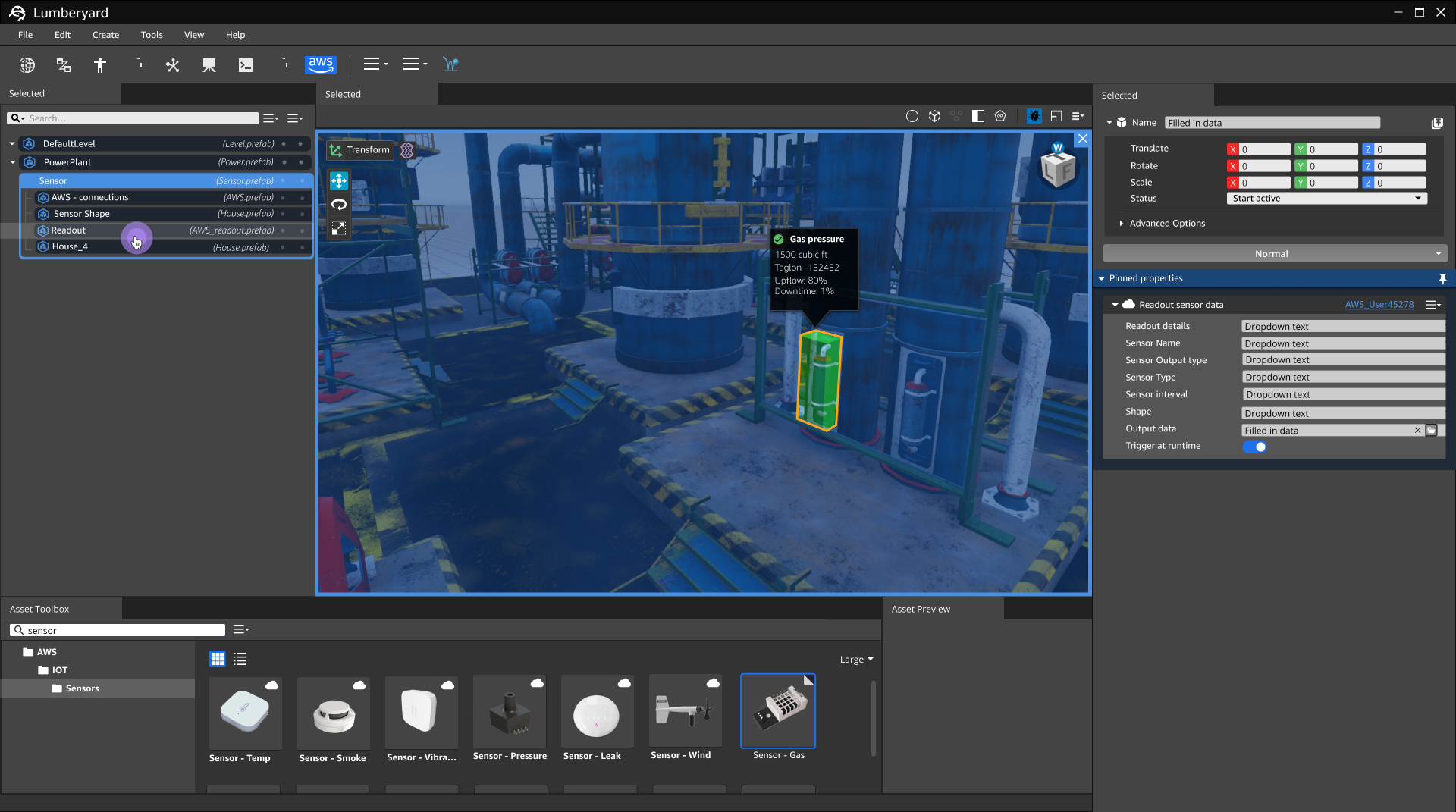
The design was demoed and received initial approval from the VP of Technology at the time. While the project never grew to the size we anticipated, portions of the work are still visible inside the editor today—including the project template selector and core gem selectors, as well as elements within the installer experience.