Making a Asset Browser system for a video game engine


Transforming O3DE’s Asset Management:
The Asset Browser Revolution
The Challenge: As UX chair for the O3DE foundation, I encountered a significant pain point: our Asset Browser was severely lacking compared to competitors. One customer’s feedback encapsulated the issue: “Your asset browser has no features and is awful compared to other game engines. You have to do everything inside Windows Explorer.” This reflected a broader frustration within our community. No one asked me to find this problem. I found it through direct customer contact and brought it forward myself. A systematic audit confirmed the full scope: O3DE’s RTE score was 2.8 out of 5, a failing grade, and the product supported approximately 5% of the features competing engines offered.
The Vision: I saw an opportunity to transform how developers interact with assets in O3DE by creating an Asset Browser that would:
Bring asset management fully into the O3DE environment
Match or exceed the functionality of our competitors
Streamline workflows for developers
Enhance O3DE’s overall user experience and competitiveness
The Approach: To tackle this challenge, I:
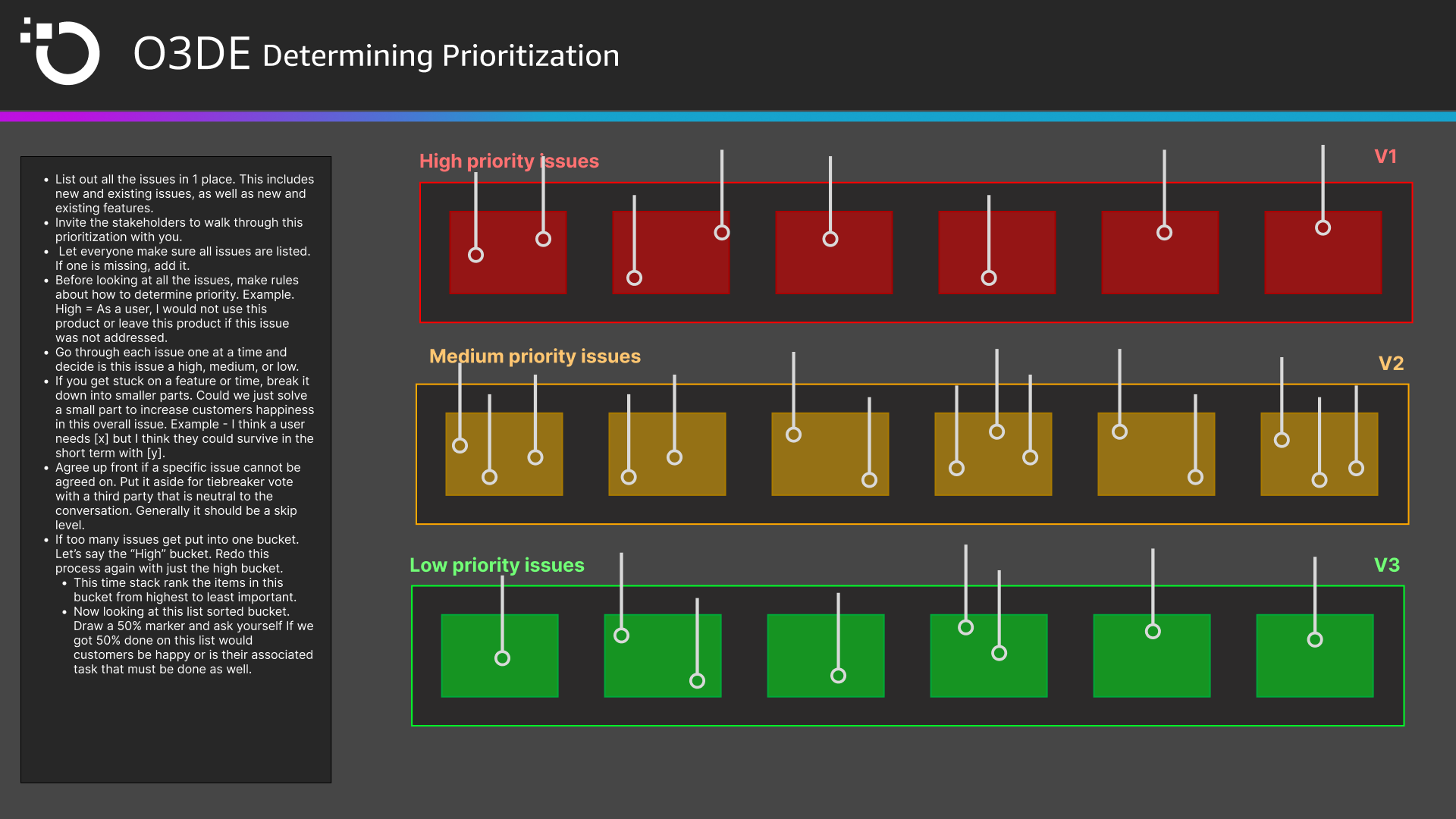
Conducted a comprehensive two-phase research package: a competitive analysis across four major game engines and a feature prioritization framework cross-referenced against customer ticket volume and interaction frequency, revealing that we only had about 5% of the features of other major game engines.
Built the business case independently and presented findings to leadership, securing resources to run the project including a TPM, lead SDM, several developers, and an external contractor engineering team to accelerate delivery.
Prioritized features based on user feedback and usage patterns.
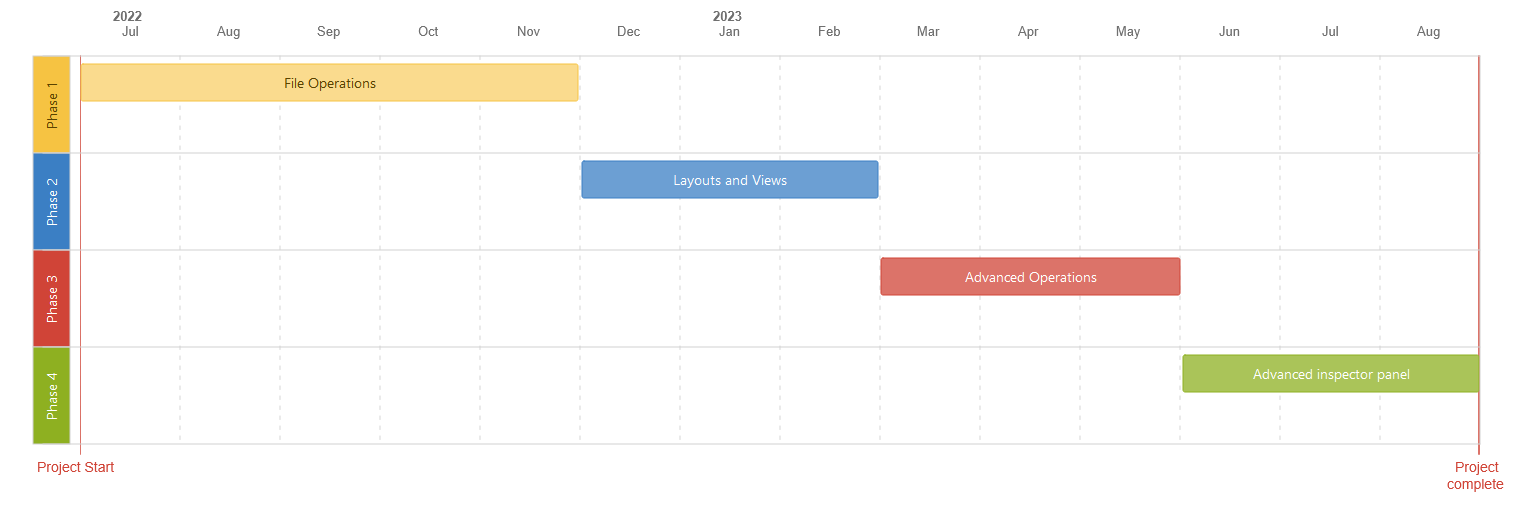
Developed a phased approach to implementation, focusing on critical functionalities first, structured across four phases of delivery over 18 months.
Led a cross-functional team, balancing UX design with technical feasibility.
Secured and managed an external contractor engineering team to accelerate delivery, running weekly live delivery reviews to verify every feature matched specification before accepting code.
Stepped into a dual role as PM and lead UX designer after the assigned PM stepped away due to medical leave, carrying both responsibilities for the full duration of the project.
Coordinated with the Asset Processor team to ensure the new Asset Browser design accounted for intermediate asset handling, a technically complex dependency that required design decisions to remain compatible with an active RFC being developed in parallel.
My Role: Beyond design, I took on project management responsibilities:
Writing tickets and prioritizing work
Designing features and ensuring development met specifications
Reviewing completed work
Collaborating with TPMs, SDMs, developers, and contracting teams
Running weekly live delivery reviews with the external contractor team, verifying every feature against design specifications before accepting code
The Four Phases of Delivery:
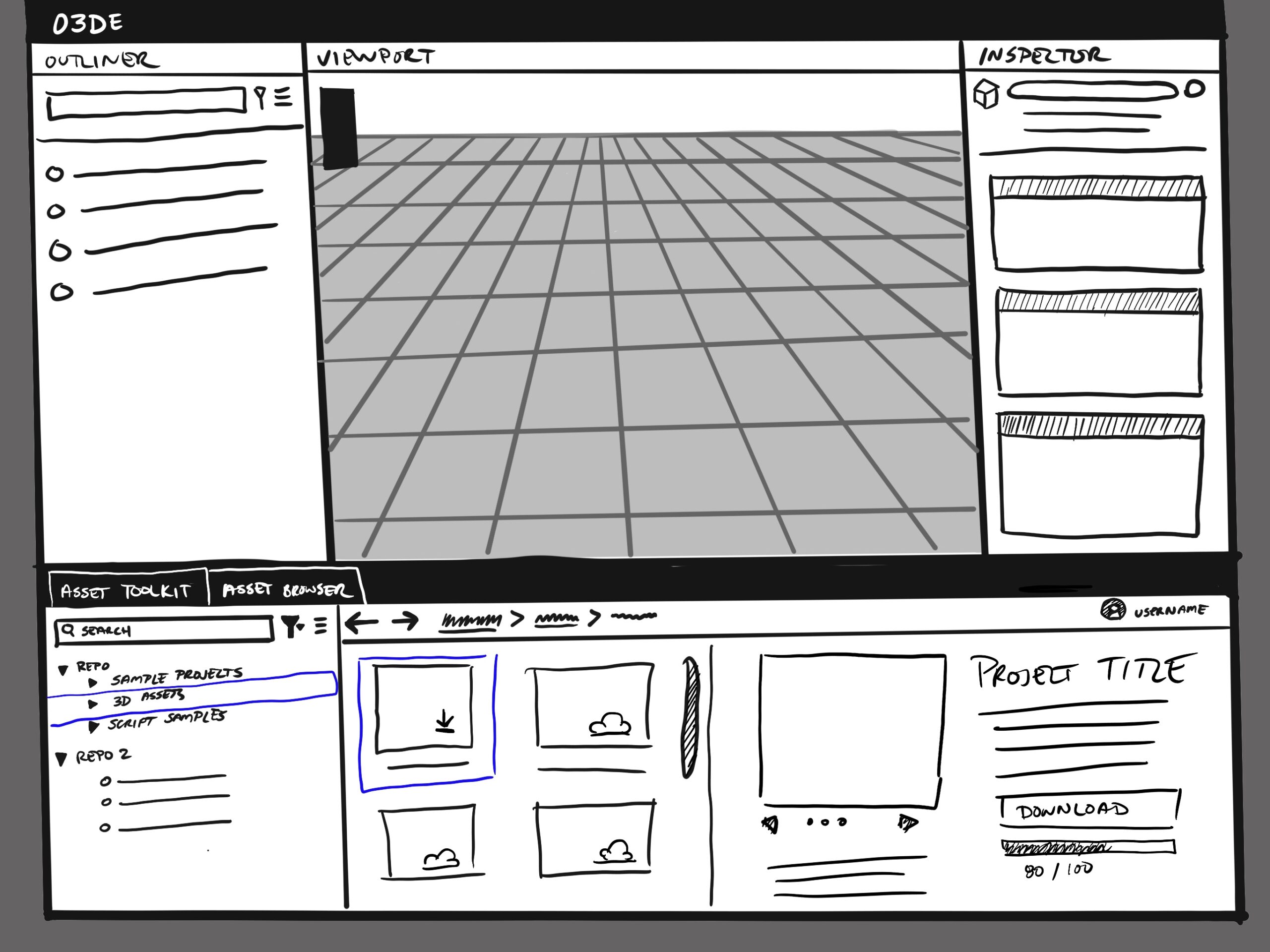
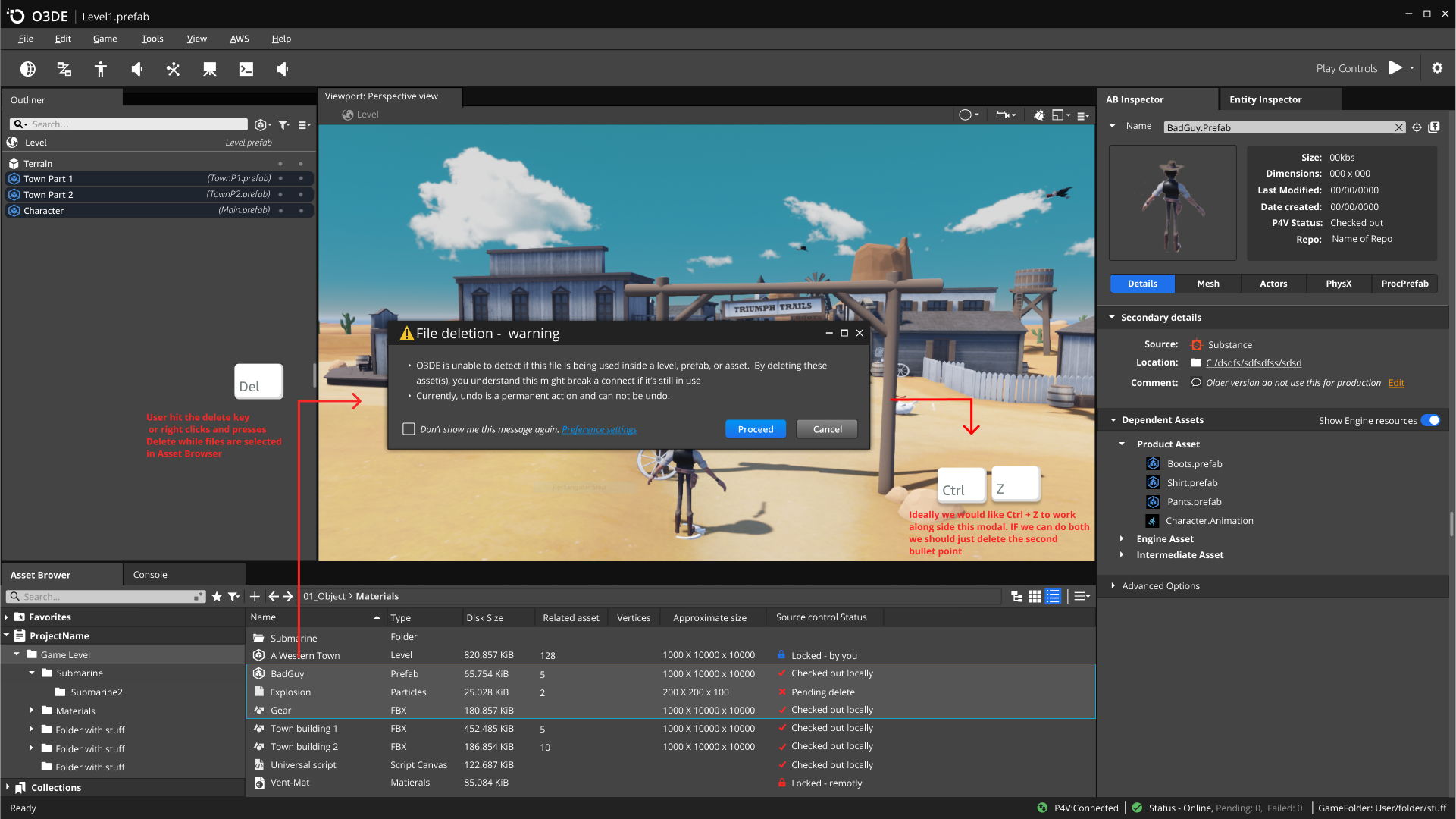
Phase 1 — File Operations: Delete, edit, move, add, duplicate, rename, drag and drop, folder management, and source control integration
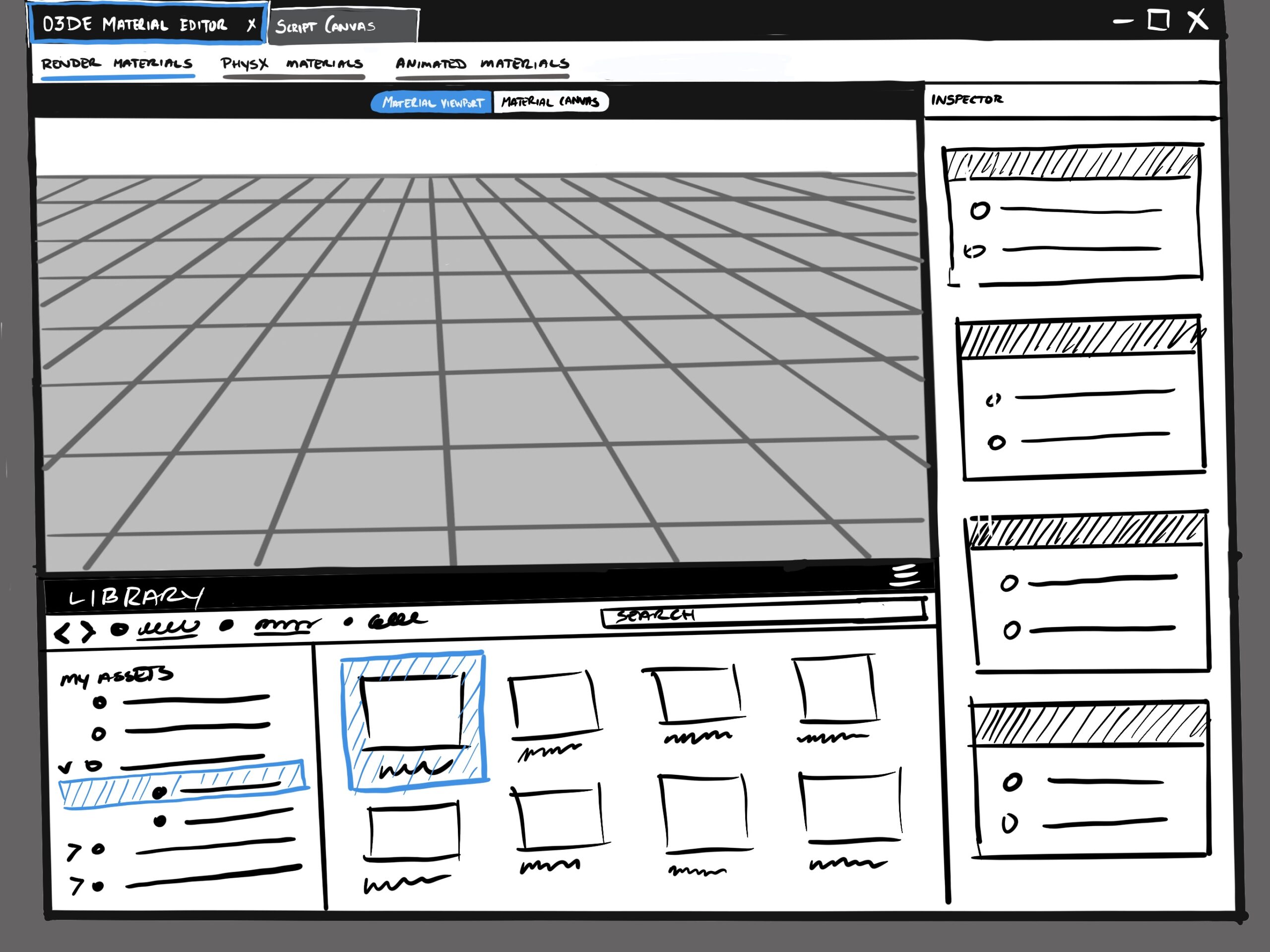
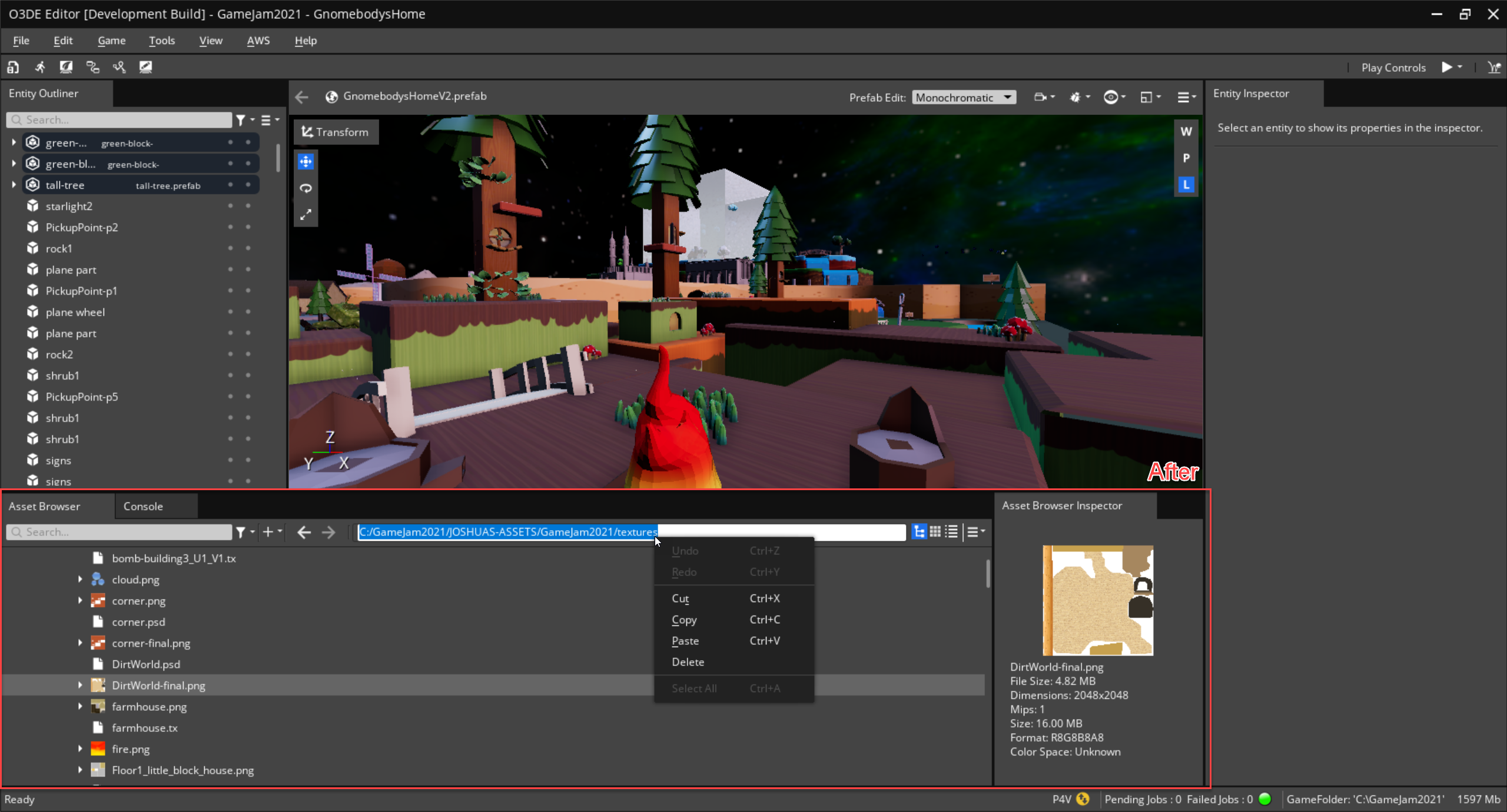
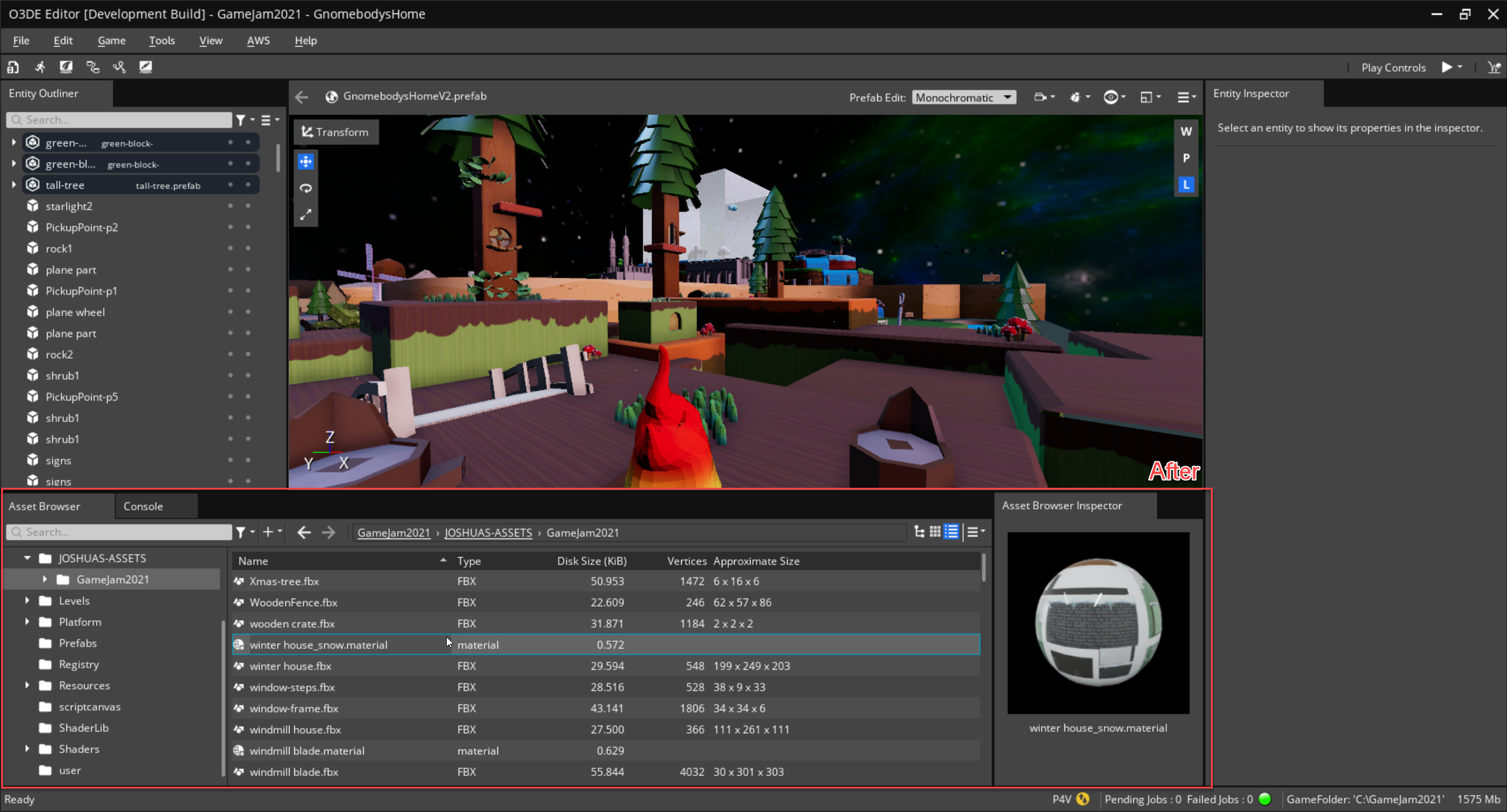
Phase 2 — Layouts and Views: Three new layout modes (list, thumbnail, table), a new detail panel, URL navigation, source control status indicators, and navigation buttons. Research validation was conducted with internal and external game studio participants before committing to final implementation.
Phase 3 — Advanced Operations: Drag and drop between Asset Browser and external tools, favorites, improved search with logical operators and regex support, and multi-browser support
Phase 4 — Asset Browser Inspector Panel: Dependent asset visualization, asset tagging, engine asset visibility controls, and enhanced 3D preview
Key Achievements:
Delivered over 285 new features and bug resolutions
Implemented 3 new layouts/view modes
Added dozens of advanced operations (favoriting, drag and drop, advanced searching, multi-window)
Developed a new asset inspector property panel
Closed 85 additional ambiguous customer requests
Improved Asset Browser RTE score from 2.8 to 4.25–4.5 out of 5, taking a failing product experience to near-excellent within 18 months
Key Innovations: Our new Asset Browser introduced:
Intuitive file operations within the O3DE environment
Multiple view modes to suit different workflows
Advanced search capabilities for quick asset location
A new asset inspector panel for detailed property viewing and editing
Drag-and-drop functionality for seamless asset manipulation
Impact: The transformed Asset Browser:
Eliminated the need for users to switch between O3DE and external file management tools
Significantly reduced time spent on asset management tasks
Improved discoverability of assets within projects
Aligned O3DE’s capabilities with industry standards, enhancing our competitiveness
Dramatically improved user satisfaction, evidenced by positive community feedback
Removed barriers for customer onboarding and daily operations
Eliminated an entire category of support tickets
Gained recognition from the Linux Foundation, leading to a featured presentation opportunity
Received recognition from multiple levels of leadership at launch, including an L10, multiple L8s, and an L7
Received unprompted external coverage from a prominent game development content creator, confirming the community impact of the work
A User’s Perspective: Developers can now seamlessly browse, organize, and modify assets without leaving the engine environment. The new multi-view options allow quick switching between high-level project overviews and detailed asset inspections. Advanced search and filtering capabilities mean finding the right asset in complex projects is now a matter of seconds, not minutes. Community response at launch confirmed the impact firsthand: “OMG the asset browser is so much easier to use” and “Woah you guys finally worked on asset browser, this looks awesome.”
The Bigger Picture: This project fundamentally changed how developers interact with O3DE. By bringing robust asset management into the engine, we’ve not only improved efficiency but also enhanced the overall user experience of working with O3DE. This transformation has positioned O3DE as a more competitive and user-friendly option in the game engine market.
Looking Forward: The success of the Asset Browser project has opened up new possibilities, including exploring advanced features like streaming-based browser UX for large-scale content management, further cementing O3DE’s position as a forward-thinking, developer-friendly game engine.
In essence, this project transformed a major weakness into a strength, significantly enhancing O3DE’s value proposition to game developers and solidifying its position in the competitive game engine landscape.